Career Report · Signal.MD · 2017

Between Reality andHirune Hime

Mitsuhiro Arita spent approximately one year contributing to Kenji Kamiyama's animated feature. His own description identifies concept design as his role—but the surviving public record does not yet tell us which individual elements came from his hand.

Concept DevelopmentOne YearAnimated Feature2017
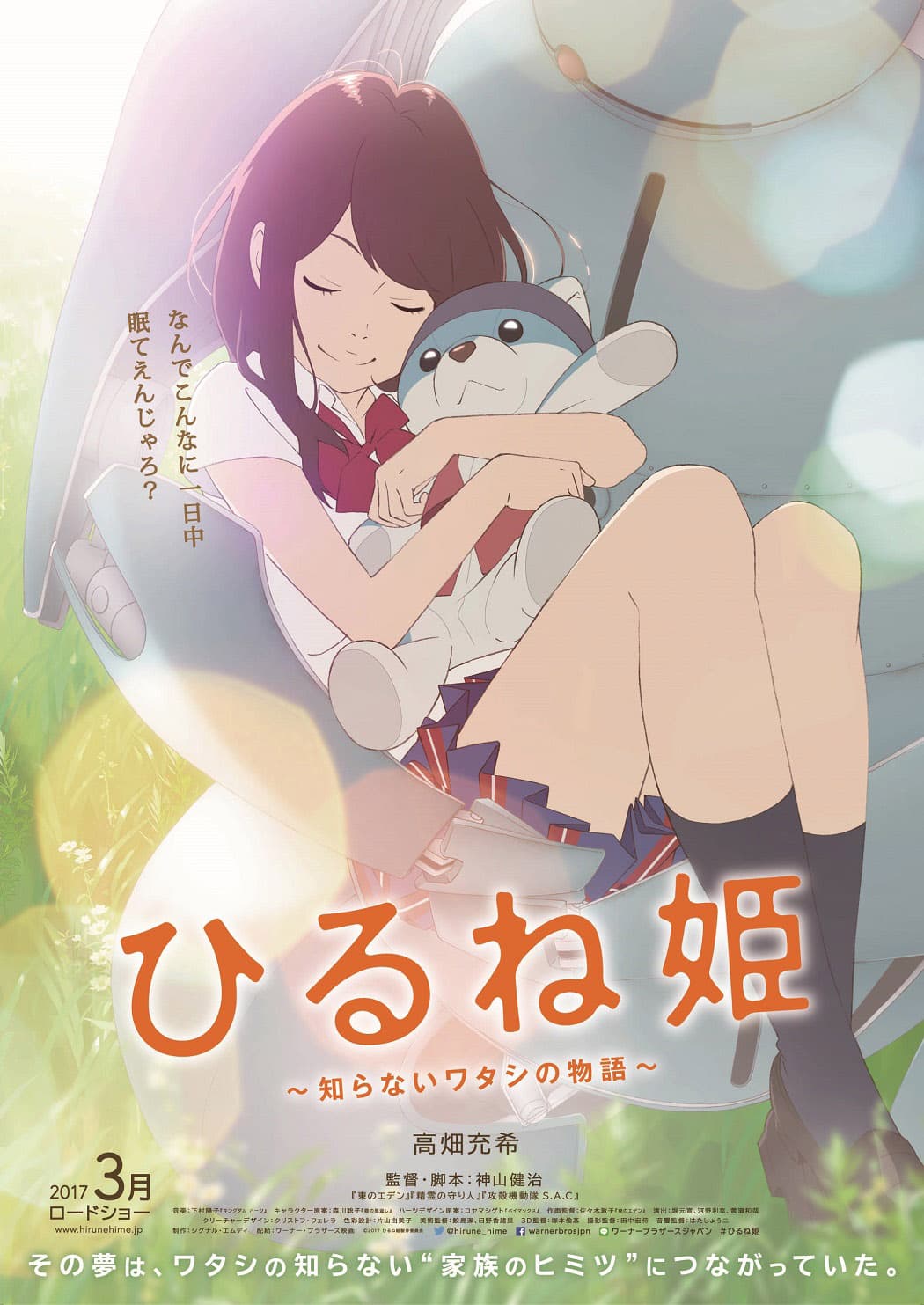
Official Japanese key visual for Hirune Hime

His Documented Role

Concept Designer, in Arita's Own Account

In the biography published on his official website, Arita says that he worked on Hirune Hime: Shiranai Watashi no Monogatarias a concept designer for one year. This is the strongest direct evidence concerning the nature and duration of his participation.

However, a concept designer can explore many ideas that are later transformed, combined or discarded. Since Arita has not published a labelled gallery comparable to his Berserk archive, the film's finished imagery cannot be divided safely by eye alone.

Japanese title
ひるね姫 ~知らないワタシの物語~
International title
Napping Princess
Director
Kenji Kamiyama
Studio
Signal.MD
Distributor
Warner Bros. Pictures
Running time
111 minutes

The production record

One Year Building a Dream

Development

One Year Inside the Project

In his own career biography, Mitsuhiro Arita states that he worked on Hirune Hime for one year as a concept designer. This places his contribution during development, when the film's visual ideas and the relationship between its two worlds were still being constructed.

Production

Reality and Heartland

The film constantly moves between Kokone's everyday life in Kurashiki and Heartland, the industrial fantasy kingdom of her dreams. Concept development had to support a visual correspondence between family history, automotive technology, magic, factories and transforming machines.

Credits

A Documentation Discrepancy

Arita calls himself a concept designer on the project, while some English-language transcriptions of the theatrical credits list him as a planning assistant. Both records are preserved here. Without production sheets bearing his name, individual machines, locations or creatures should not be assigned to him.

18 Mar. 2017

Japanese Theatrical Release

Warner Bros. released the 111-minute feature in Japan. It was written and directed by Kenji Kamiyama, produced by Signal.MD and scored by Yoko Shimomura. International releases used the titles Napping Princess and Ancien and the Magic Tablet.

30 Mar. 2017

The Official Guidebook

Kadokawa published a 112-page A4 official guidebook shortly after the premiere. It documents the film, its story and production through interviews and visual material, making it an important physical lead for deeper identification of Arita's contribution.

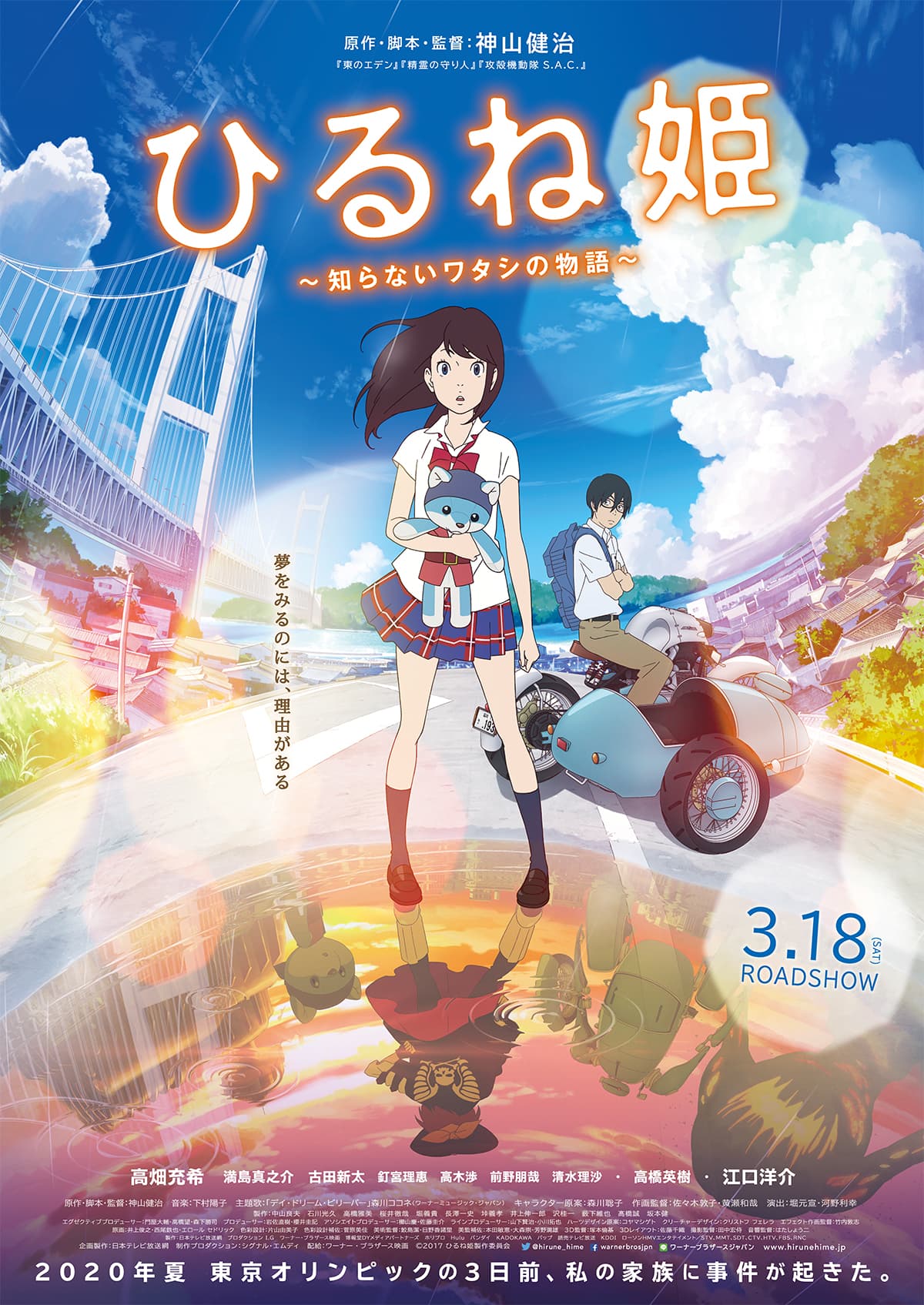
Official Hirune Hime promotional image showing the film's dream imagery

The Conceptual Challenge

Two Worlds, One Family History

Kokone's real journey through Okayama and Tokyo is reflected by a dream narrative set in Heartland. Cars become machines with personalities, industrial power becomes royal authority and a tablet becomes a magical object. The fantasy is not separate decoration: it translates memories and technological conflict into a second visual language.

This dual construction explains why a concept-development phase could last a year. It does not, by itself, identify Arita as the designer of Heartland, Hearts or any particular creature. The image alongside this text is official film material used only to explain the production context.

Confirmed

What We Can Publish

  • Arita personally states that he worked on the film for approximately one year.
  • He describes his function in his biography as concept designer.
  • His involvement concerns the production of the animated feature, not a later promotional commission.
  • Signal.MD appears in Arita's published client list.
  • The film was released theatrically in Japan on 18 March 2017.
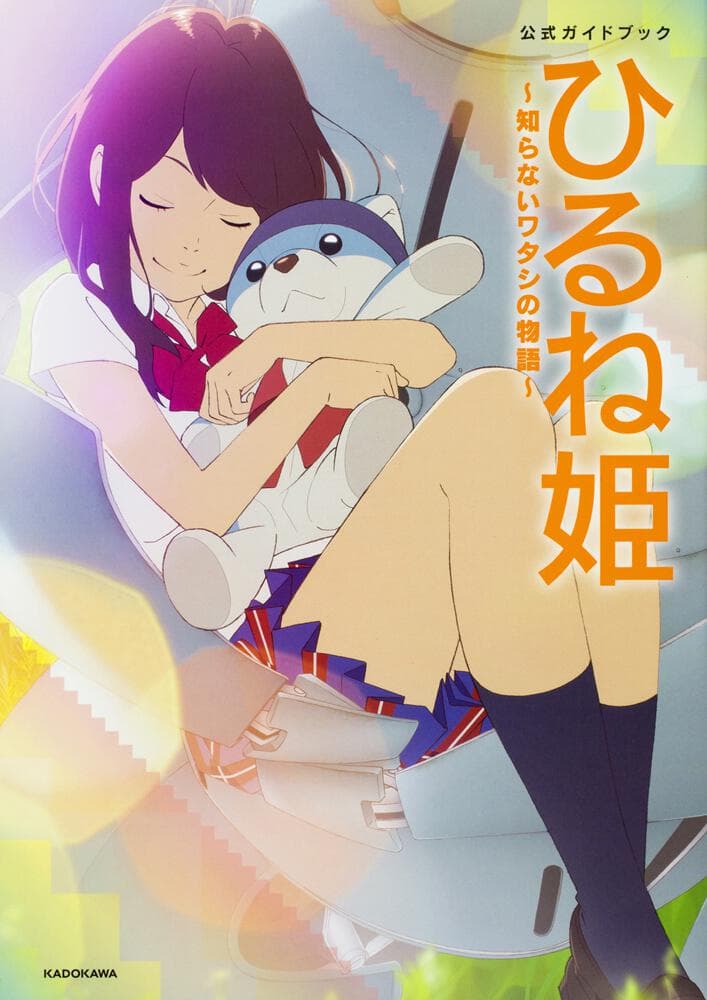
Official Hirune Hime guidebook published by Kadokawa

Physical Research Lead

The 112-Page Official Guidebook

Kadokawa's A4 guidebook was released on 30 March 2017 under ISBN 978-4-04-105565-6. It includes story material and interviews with the principal staff and cast. It is the most relevant published object to inspect for labelled development material.

Presence in the guidebook is not yet confirmed for Arita; the book is identified here as a research lead, not proof that every concept page inside belongs to him.

Sources & further research

Research status: Arita's year-long involvement is confirmed by his own testimony. Individual concept drawings remain to be identified.