Career Report · Nintendo Game Boy · 1996

Beyond IllustrationPicross 2

In 1996, Mitsuhiro Arita appeared in a Nintendo game under a rare and revealing credit: Puzzle Designer. Picross 2 documents a part of his career based not on painting an image, but on transforming images into playable logic.

Puzzle DesignerGame BoyCreatures / JupiterJapan Only
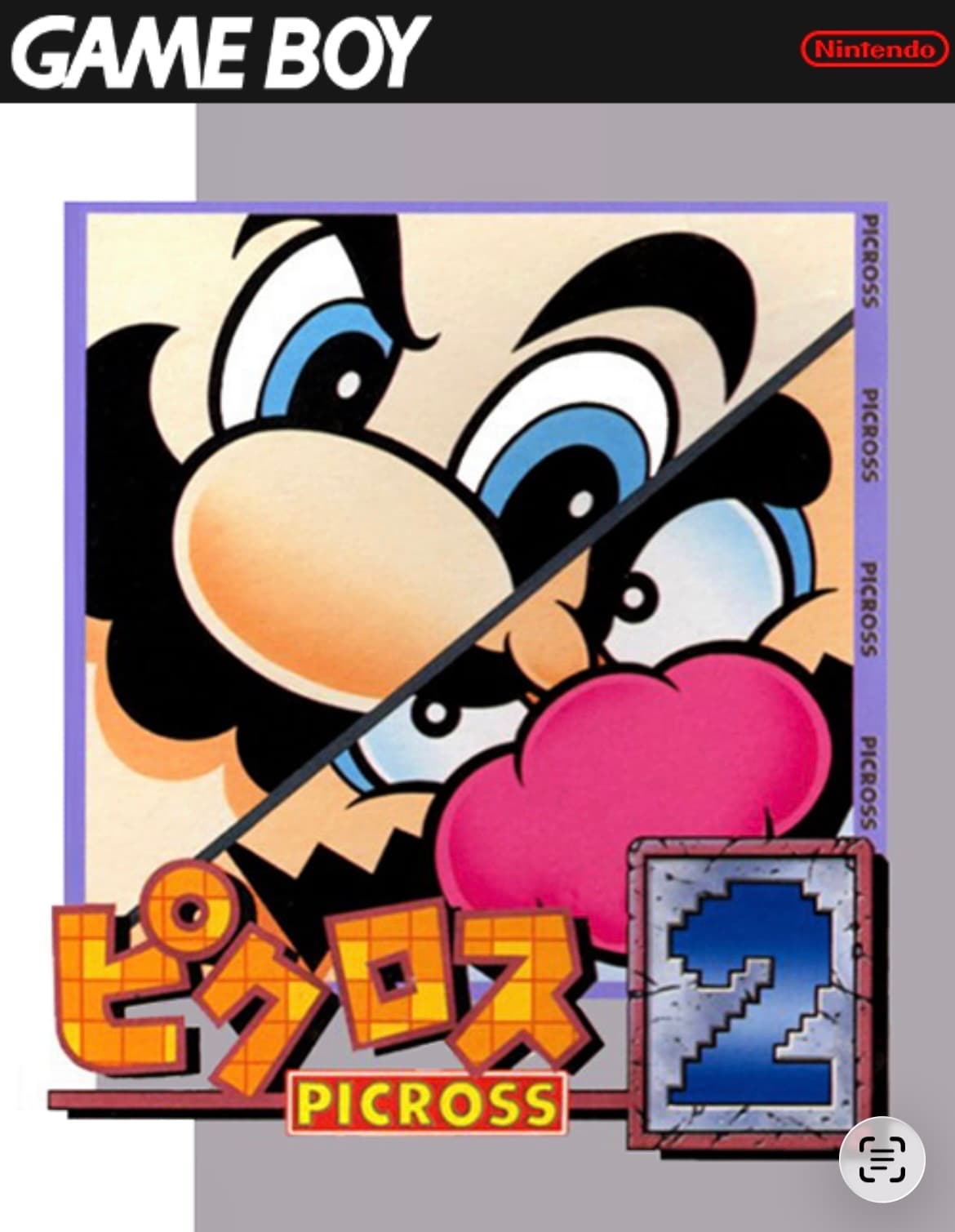
Japanese Picross 2 Game Boy package

The Confirmed Credit

Mitsuhiro Arita — Puzzle Designer

Arita is named alongside Aguru Tanaka, Masaru Kuribayashi, Miwa Takashima, Sachiko Iguchi, Seiji Kuroiwa, Yasuyuki Yamashita and coordinator Norichika Meguro. The plural credit establishes a collaborative puzzle team rather than a sole designer.

It is one of the earliest confirmed commercial credits in his career and predates the first Pokémon card set. It also proves that his relationship with images already included structure, readability and problem-solving—not simply finished artwork.

Original release
19 October 1996
Platform
Nintendo Game Boy
Development
Creatures Inc. / Jupiter
Publisher
Nintendo
Arita's credit
Puzzle Designer
Japanese title
ピクロス2

The production story

Designing With Numbers

1995

After Mario's Picross

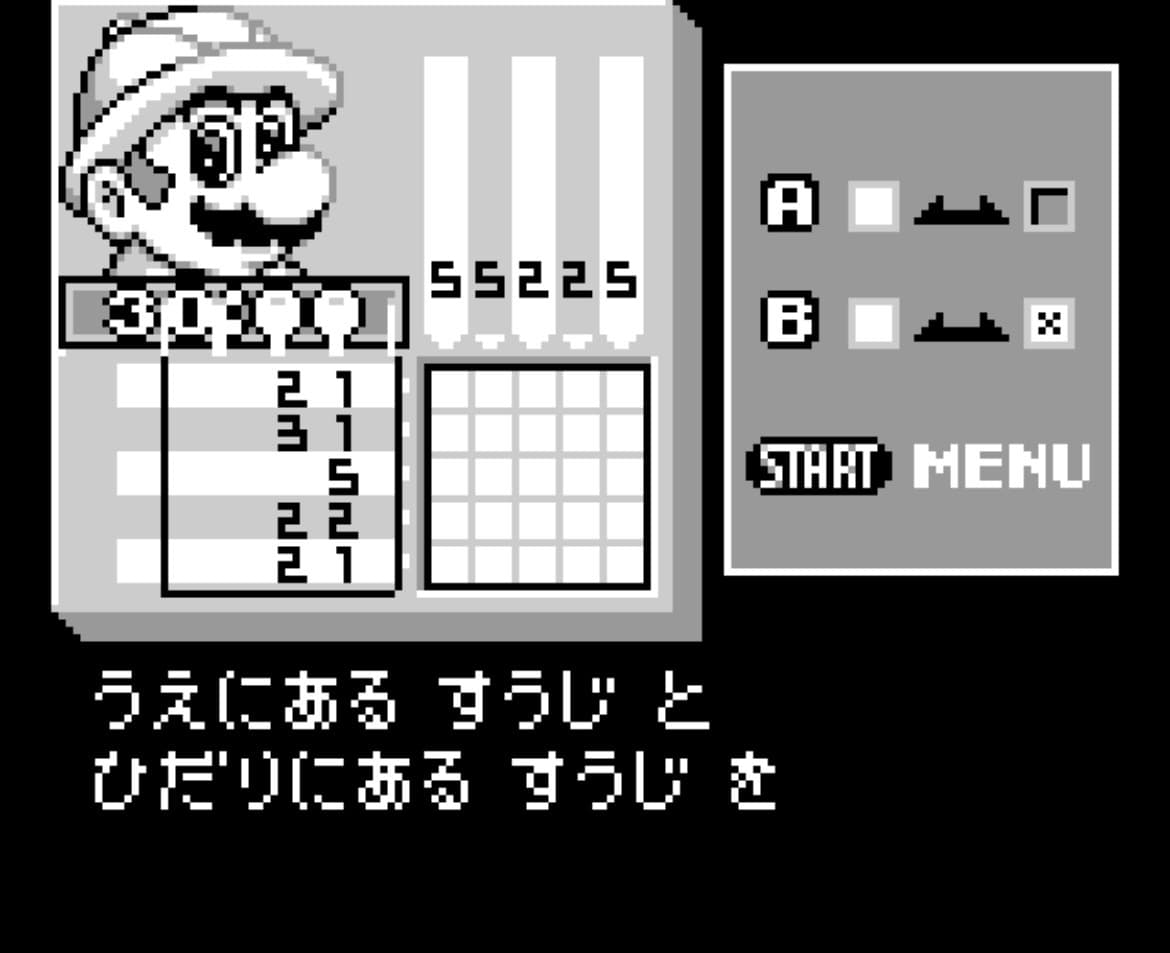
Picross 2 followed Nintendo's first Game Boy Picross title and expanded the picture-crossword formula. Numbers placed along the horizontal and vertical axes indicate how many consecutive squares must be revealed; completing the logic exposes a hidden pixel image.

Production

Arita Joins the Puzzle Team

The end credits list Mitsuhiro Arita as one of eight Puzzle Designers under puzzle coordinator Norichika Meguro. This is a genuine game-design credit: the role concerns the conception and testing of nonogram problems, not package illustration or screen graphics.

19 Oct. 1996

A Japan-Only Game Boy Release

Nintendo released Picross 2 exclusively in Japan. The project was presented by Nintendo, Creatures and Jupiter, placing Arita inside an important early collaboration shortly before his best-known work for the Pokémon Trading Card Game.

Game design

Mario and Wario, Two Rule Sets

Mario's mode identifies an incorrect move and applies a time penalty. Wario's harder mode neither corrects mistakes nor supplies the same assistance. Larger pictures are assembled from four connected 15 × 15 sections, requiring designers to balance the local grids with the final image.

2012

Preserved on Nintendo 3DS

The original Game Boy version returned on the Japanese Nintendo 3DS Virtual Console on 24 October 2012. Nintendo's archived page confirms the 1996 origin, the three principal modes and the core numbered-grid rules.

Inside the Grid

An Image Becomes a Deduction

A Picross designer begins with a binary picture: every square is either filled or empty. The visible image then disappears behind sequences of numbers. A successful grid must allow the player to reconstruct it through deduction rather than guessing.

  • Choosing a recognisable image that can survive translation into a monochrome grid
  • Building row and column clue sequences from the completed pixel pattern
  • Controlling deduction order so that a grid can be solved logically
  • Balancing clarity, difficulty and the risk of ambiguous progress
  • Testing the puzzle within the limits of the Game Boy interface
Picross 2 numbered puzzle grid on Game Boy

Documentation

Verify the Record

Research status: the Puzzle Designer credit is confirmed. The number and identity of Arita's individual puzzles remain undocumented.