Career Report · Amata · 2022
Building the World ofThe Tale of Onogoro
For the Japanese VR adventure The Tale of Onogoro, Mitsuhiro Arita moved beyond the flat image. As an Environment Concept Artist, he helped define a parallel Taishō world where steam machinery, sacred architecture and supernatural energy share the same space.
Environment ConceptVirtual RealityTaishō Steampunk2022
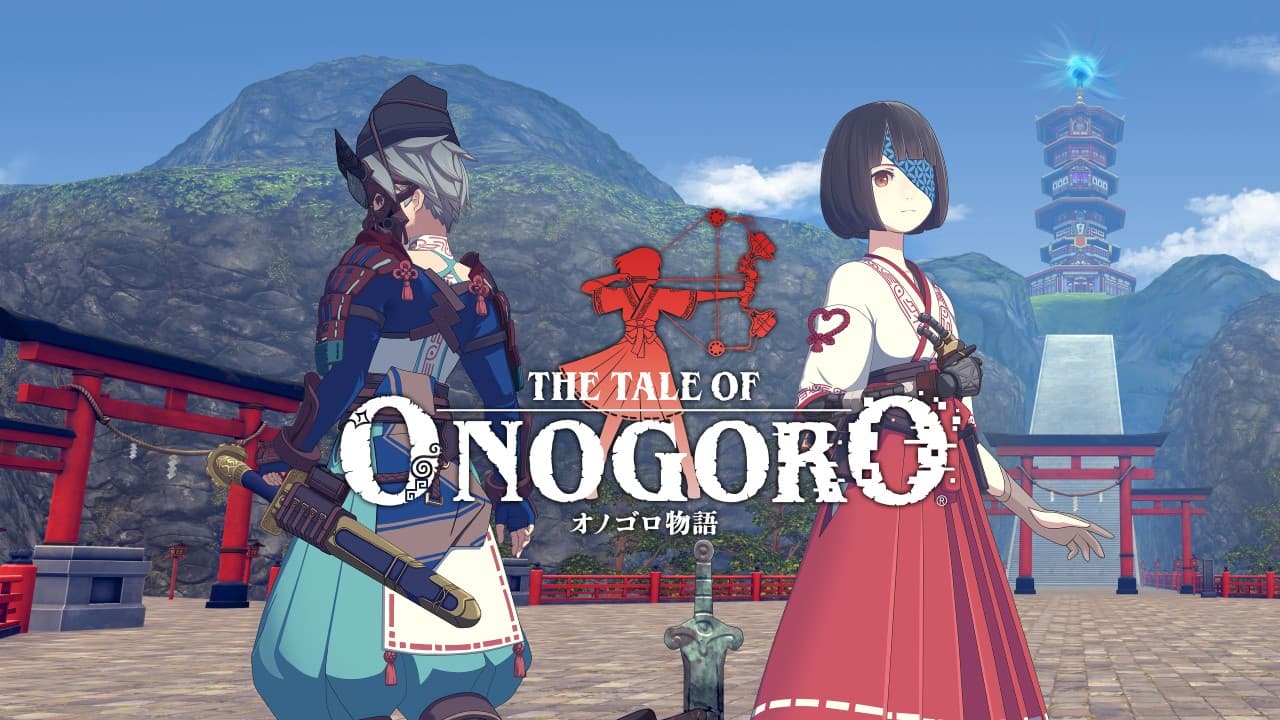
Official game visual · Amata
The final image establishes the project's central contrast: ritual Japan, monumental machinery and a world designed to be entered in VR.
The Exact Credit
Environment Concept Artist
Arita's role belongs to the visual-development stage. An environment concept artist explores the architecture, atmosphere, materials and visual rules that allow a production team to build a coherent location in three dimensions.
The official credits do not isolate his drawings or name the zones he handled. The defensible attribution is therefore the complete environment-concept contribution—not a guessed building, shrine, machine or level.
- Developer / Publisher
- Amata K.K.
- Original release
- 18 March 2022
- Genre
- VR action-adventure
- Setting
- Parallel Japan · Taishō 12
- Lead Environment Artist
- Yuuki Watanabe
- Arita's team
- Four environment concept artists
The production story
From Drawing to Virtual Space
Concept phase
Inventing a Parallel Taishō Era
The project begins with a world resembling Japan in Taishō 12—1923—but transformed by the coexistence of steam engines and the spiritual force called Ki. Environment concepts had to make shrines, industrial machinery, sacred devices and an airborne island feel like parts of one culture.
Environment team
Four Concept Artists
The official staff page credits Daphne Zhang Danni, Yumiko Katsuhara, Kimia Tabari and Mitsuhiro Arita as Environment Concept Artists. Yuuki Watanabe served as Lead Environment Artist, with a separate production team responsible for constructing the final spaces.
VR design
A World Built at Human Scale
In virtual reality, an environment is not only viewed: the player occupies it. Architecture must communicate distance and scale, guide attention, support puzzles and remain readable while the player physically looks around the scene.
18 Mar. 2022
Worldwide Meta Quest Release
Amata launched The Tale of Onogoro worldwide for Meta Quest. The adventure later expanded to SteamVR, Pico, PlayStation VR and PlayStation VR2, carrying the same environment work across multiple headsets and rendering conditions.
Legacy
Concept Art Becomes an Explorable Place
This credit differs from a card, cover or key visual. Arita contributed to the early visual definition of spaces that other specialists modelled, textured, lit and integrated into interactive levels. It is one of the clearest examples of his work within a modern 3D production pipeline.
Finished environments
The World the Team Built
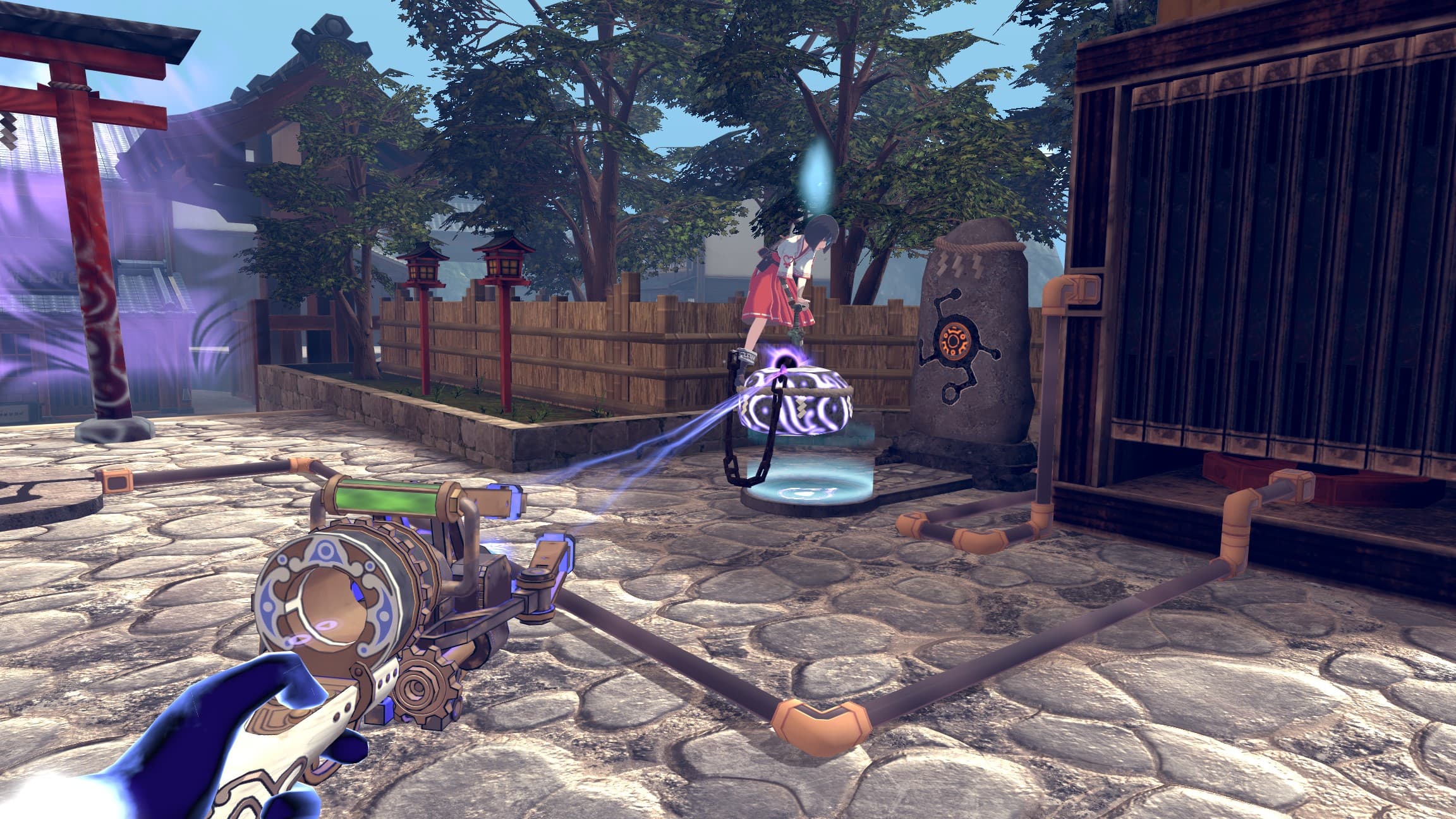
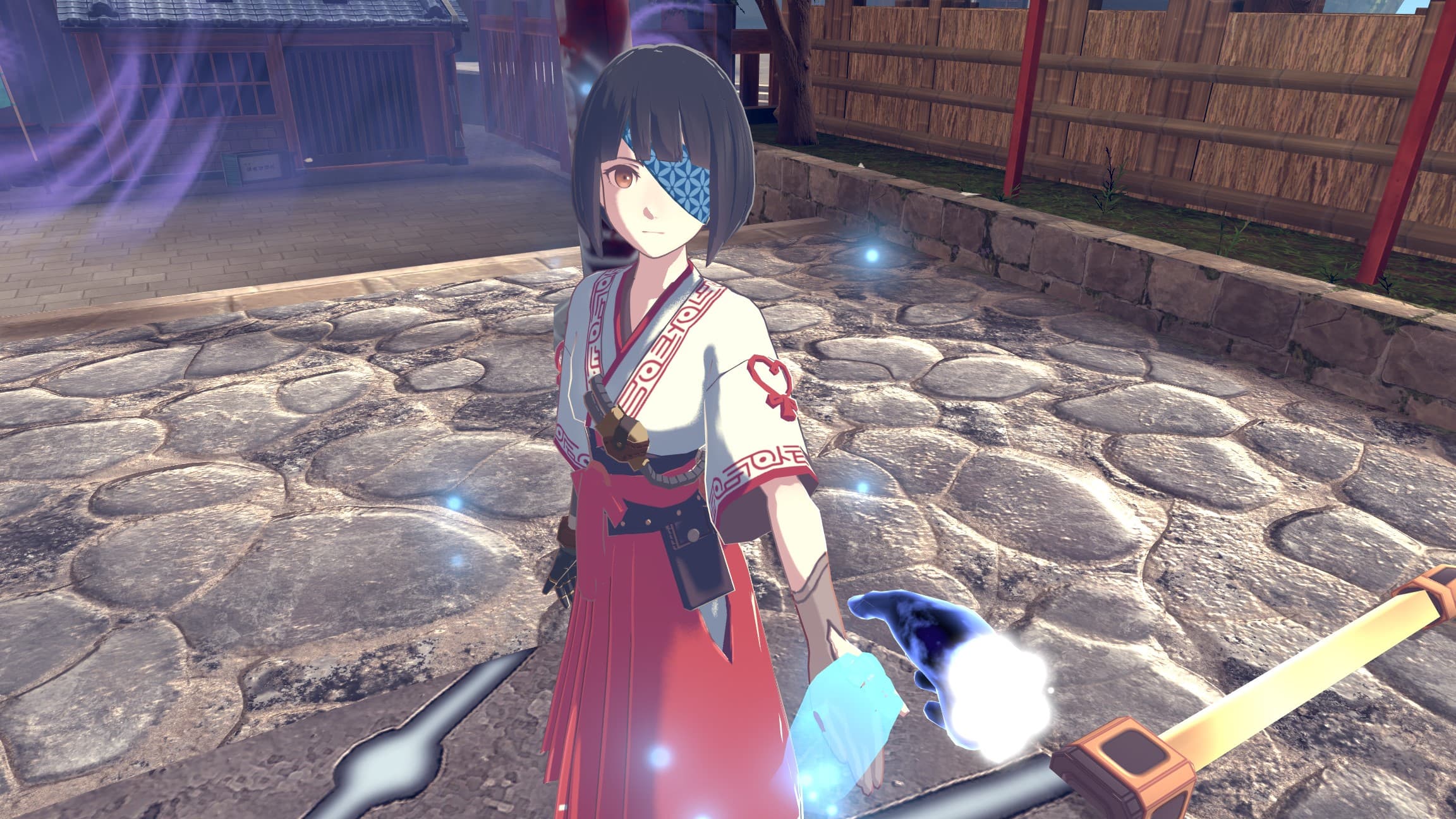
These official screenshots document the result of the environment pipeline. They show the kind of world Arita helped develop, but they are not presented as individually authored Arita images.
Ritual Architecture in VR
Torii, stonework, mechanisms and navigable platforms organise the player's movement while preserving the sacred identity of Onogoro Island.
Steam, Ki and Monumental Scale
Industrial structures and supernatural devices share a visual grammar designed to remain readable from the player's first-person viewpoint.
Environment Department
Arita's Collaborative Context
Listing the complete concept group is essential: it records Arita's participation without turning a collective VR environment into the work of a single artist.
- Daphne Zhang Danni — Environment Concept Artist
- Yumiko Katsuhara — Environment Concept Artist
- Kimia Tabari — Environment Concept Artist and Environment Artist
- Mitsuhiro Arita — Environment Concept Artist
- Yuuki Watanabe — Lead Environment Artist
Verified
What Arita Contributed
- Official credit as Environment Concept Artist
- Participation in a four-person environment concept team
- Contribution to the visual development of Onogoro's explorable world
- Work upstream from the final 3D environment production team
- Credit preserved on the game's official staff page
Official documentation
Research status: the environment concept credit is fully confirmed. Arita's individual concept sheets and assigned locations remain unidentified.